
X-Factor Hackathons
Real product engineering. Real deployment. Real teams.
Structured, industry-grade hackathons run on your campus, designed around themes your students actually care about.

Rajesh Adapa
Founder, X-Factor
Most college hackathons run for 24 or 36 hours and reward whoever ships the flashiest demo. Teams jump straight into code, skip requirements, skip design entirely, and walk away with something that looks good on stage but wouldn't survive its first day in production.
X-Factor Hackathons are designed differently. We mirror how modern technology companies actually build software — research first, design second, build third, deploy fourth, pitch last. Students don't just leave with a repo. They leave having practiced the complete cycle that runs inside any serious engineering organization.
About The Program
A hackathon program partner for colleges. You pick a theme — or co-design one with us — and we bring the full structure: problem framing, mentor guidance, engineering standards, an AI-usage policy, live deployment infrastructure, and a rigorous evaluation framework.
The result: your students don't just build a project. They build a portfolio-worthy, deployed, defensible product they can put in front of a hiring manager the next day.
Our Day Zero Approach
Before the hackathon begins, we understand your students — their year, their skill level, their placement timeline — and align on the theme, format, and duration that fits your college calendar.
A pre-final year batch running their first hackathon doesn't get the same structure as a final-year batch prepping for placements. Themes, timing, mentor intensity, and evaluation rigor are all tuned to the batch in front of us.
Available Hackathon Themes
The college picks a theme, or we co-design one based on your students' focus areas.

Industry Product Engineering
Teams are assigned an industry domain — Healthcare, FinTech, Supply Chain, Retail, Enterprise SaaS, Cybersecurity, and more — then research, scope, and build a deployed full-stack product.
Best for: Final-year, placement-focused batches

AI-Powered Chatbots
Teams design and build AI chatbots solving a specific problem — support, education, healthcare triage, HR onboarding, or campus ops — with real deployment, not just an API wrapper.
Best for: AI-curious, mixed-skill batches

Domain Challenge
HealthTech, FinTech, EdTech, or any single vertical the college wants to focus on. Every team goes deep on one domain — sharper problems, more comparable solutions at judging.
Best for: Colleges with industry partnerships

Startup Idea Sprint
Teams build an MVP and pitch it as a startup — problem, target users, market size, revenue model, go-to-market plan. Product thinking and business judgment, not just engineering.
Best for: E-cells, business schools, cross-discipline
The X-Factor Hackathon Framework
Every hackathon, regardless of theme, follows the same four-phase product development lifecycle — because this is how real engineering teams work.
Phase 01
Research & Planning
- Industry / domain research and review of existing solutions
- Problem statement definition and gap analysis
- Target users and user stories
- MVP scope and feature prioritization
- Mentor checkpoint before moving to design
AI Usage Policy
AI is treated as a legitimate engineering productivity tool — not something to hide or apologize for. Students use Cursor, GitHub Copilot, Claude, ChatGPT, and other AI tools freely.
The One Rule
Every participant must be able to explain their implementation when asked during evaluation.
A team that cannot account for its own code — AI-assisted or not — will score significantly lower. Judges question each team member individually on specific parts of the codebase. This protects the integrity of the hackathon while letting students use AI the way real engineers do.
Engineering Standards
Required
- GitHub repository with meaningful commit history — not one giant commit at the end
- Live deployed application accessible via URL before the code freeze
- README with project overview, setup instructions, and screenshots
- Architecture diagram (can be hand-drawn and photographed)
Recommended · Bonus Credit
- Feature branches and pull requests
- API documentation
- Basic testing (at least documented manual test cases)
- Environment configuration with .env.example
Evaluation Approach
Every team is evaluated across the full engineering journey — not just the working demo. Total: 100 marks, weighted across:
01
Problem Identification and Research
02
Product Planning
03
System Design
04
Technical Implementation
05
AI Integration
06
Deployment
07
Documentation
08
Final Presentation
Judges question each team member individually. If only one or two members can explain the project, the team score is adjusted accordingly.
What Every Team Walks Away With
- A live, deployed application accessible via public URL
- A public GitHub repository with meaningful commit history
- A README with project overview, setup instructions, and screenshots
- A system architecture diagram
- A 5–7 minute product presentation with live demonstration
- Real experience with the complete software development lifecycle
Format & Duration
Typical Duration
24–48 hrs overnight, or a 2-day format
Team Size
3–5 students per team (adjustable)
Batch Capacity
50 to 300+ students
Mode
On-campus (preferred), mentors throughout
Final format, timing, and structure are confirmed after we understand your specific requirements.
What We Need From The College
- A hall or auditorium that can host the batch overnight or across two days
- Reliable internet connection and uninterrupted power supply
- Students carry their own laptops
- A basic AV setup for the final pitch presentations
- Support from the placement / CSE / tech department for mentor coordination
Real Product Development Lifecycle
Most hackathons reward whoever ships fastest. Ours rewards whoever builds properly. From the very first hour, teams are pushed to research first, design second, code third — the exact sequence used inside real engineering organizations.
This is what turns a hackathon from a 24-hour code sprint into a compressed version of how software actually gets built. Students don't just leave with a demo. They leave having practiced the discipline that hiring managers actually look for.
Why X-Factor For Hackathons
Rajesh Adapa
Founder, X-Factor — with the X-Factor Training Team and industry mentors
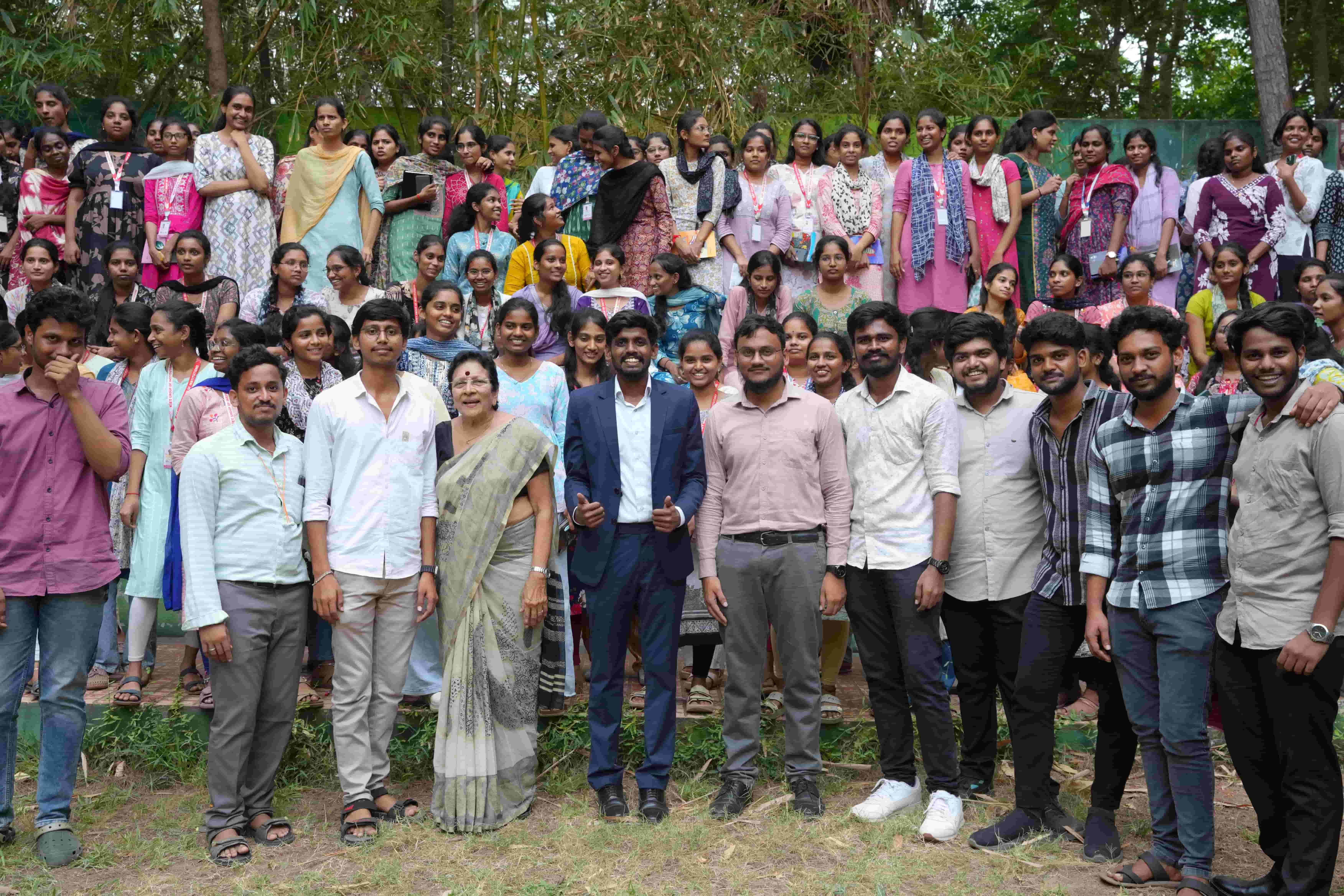
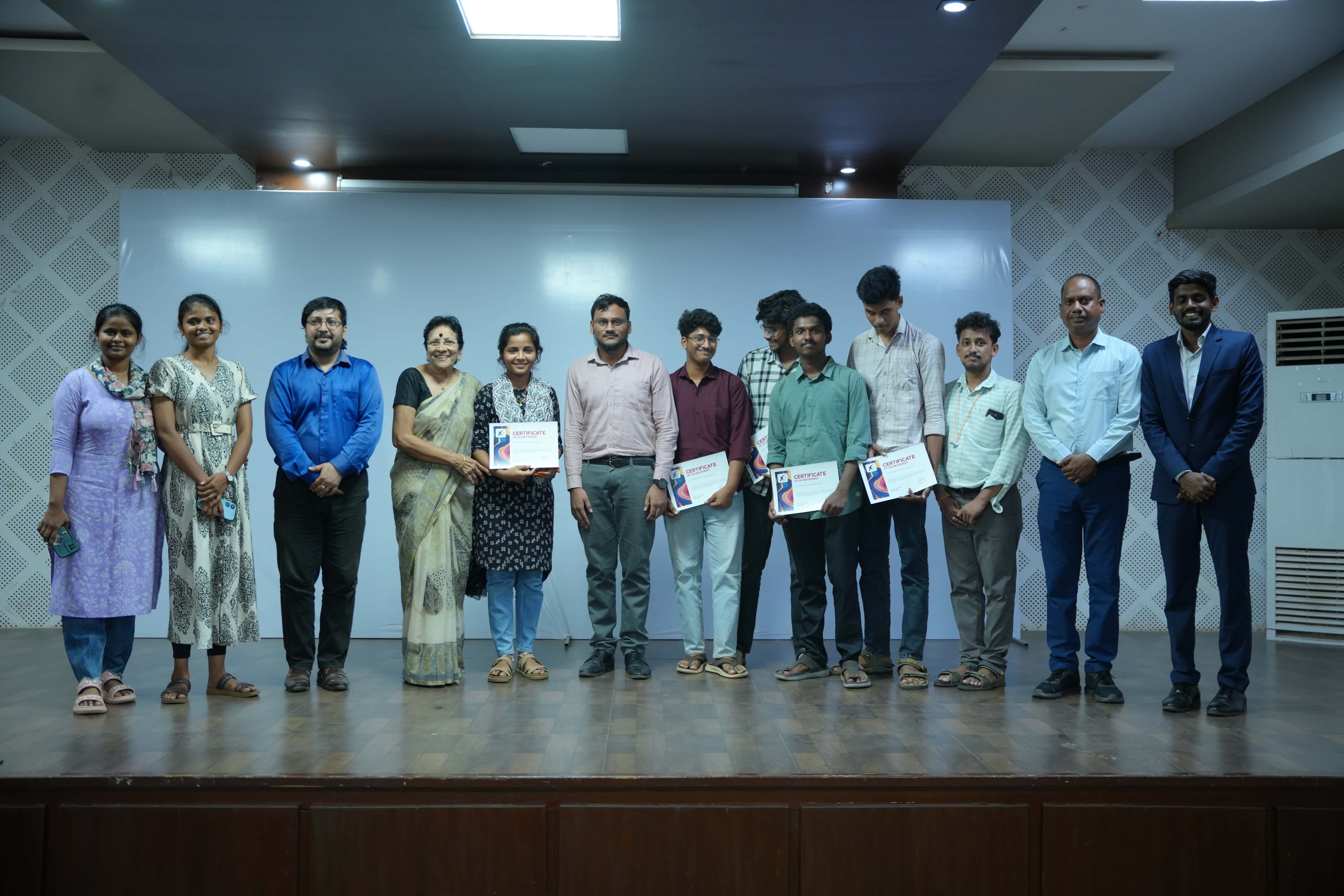
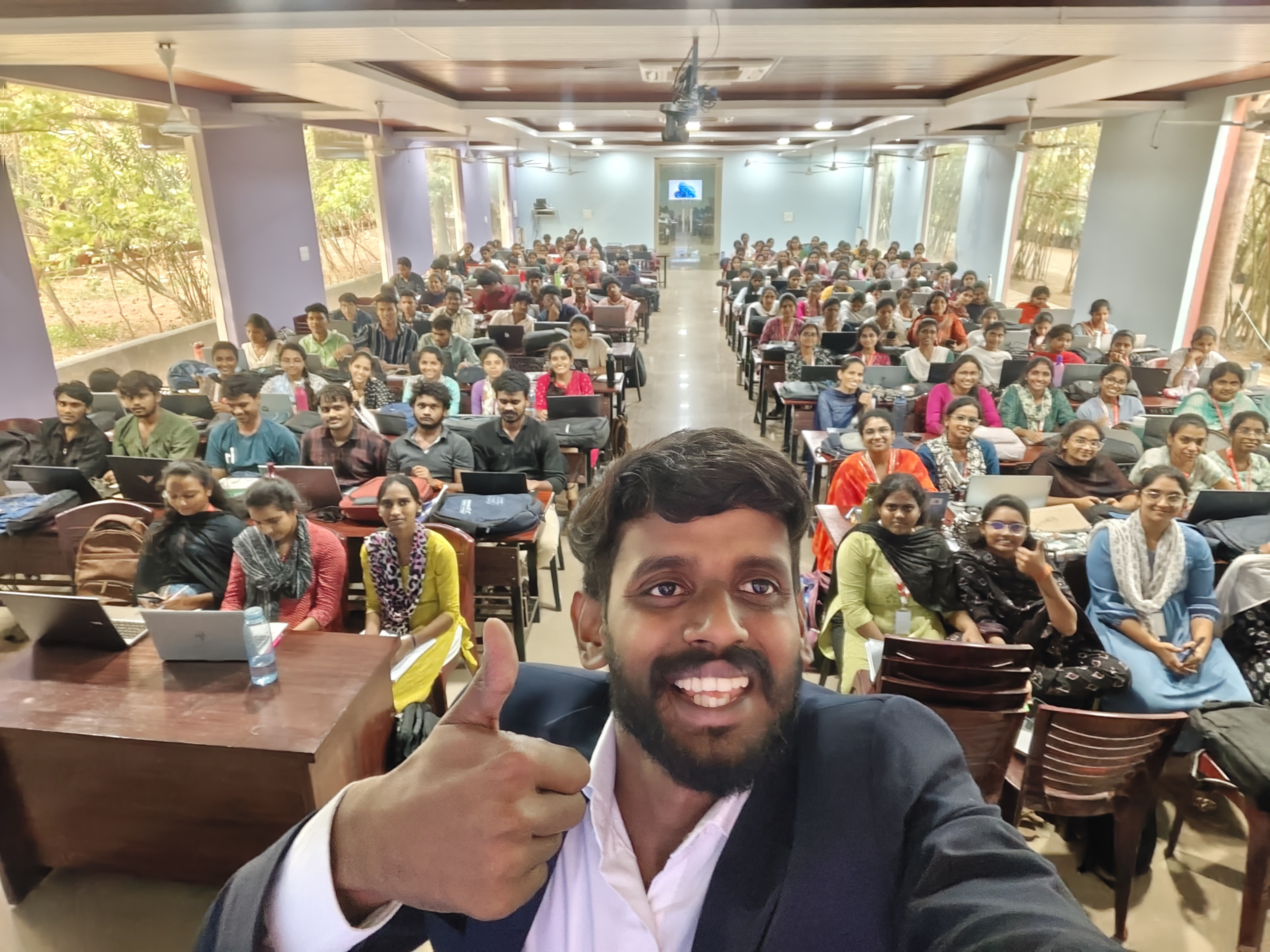
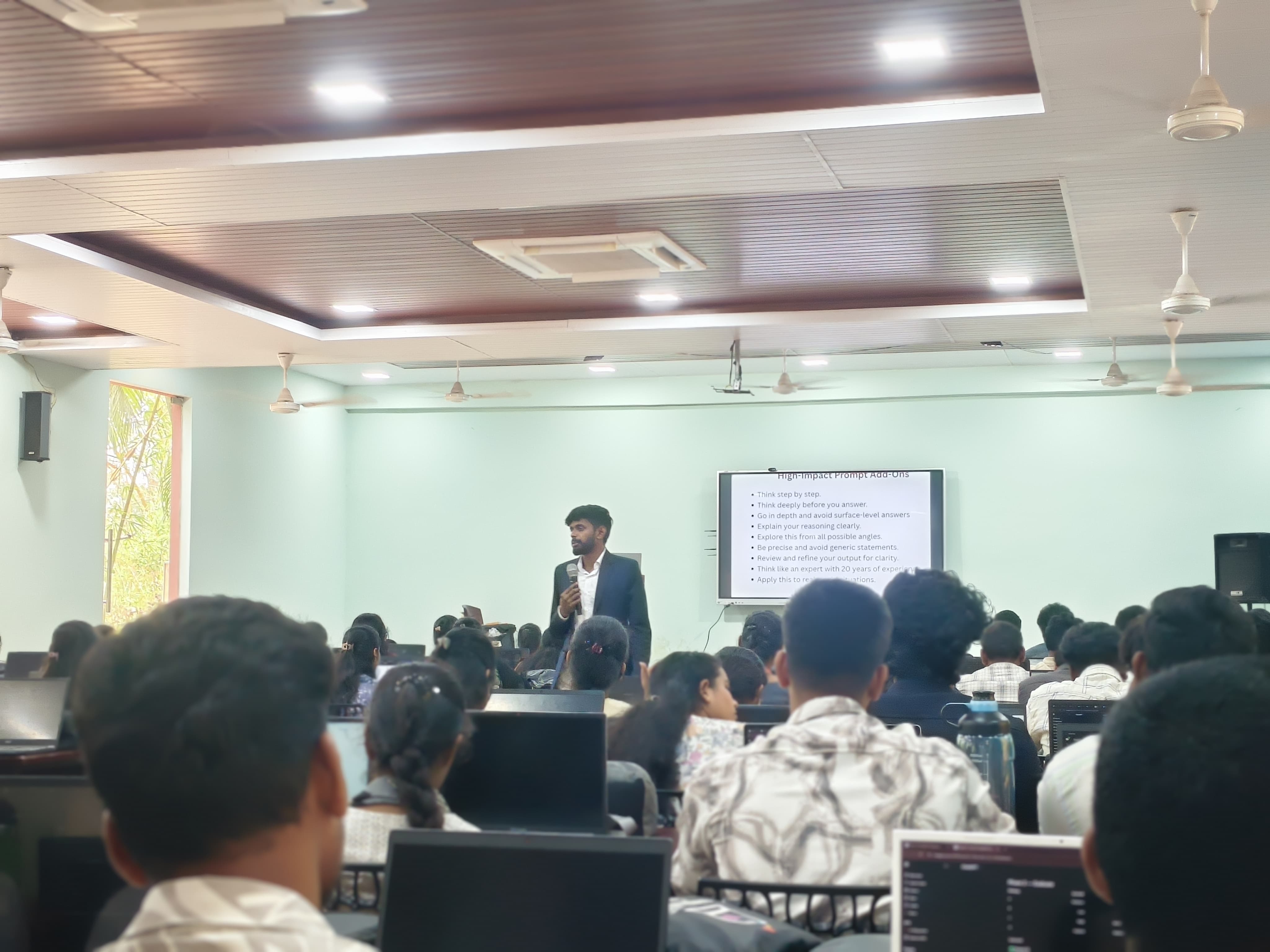
Rajesh has personally led 30+ workshops and 125+ live session days across engineering and degree colleges in India, including large-scale competition formats.
On request from the college management, we extend the hackathon with 15 days of post-event support:
- A dedicated Q&A access window for all participating teams
- A community group connecting the teams for continued collaboration
- A follow-up call to help teams take projects from hackathon-quality to portfolio-ready
Numbers That Back It Up
2,000+
Students Trained
30+
Multi-Day Workshops
125+
Live Session Days
4.5/5
Avg. Rating · 2,500+ Responses
KIET (Kakinada)
50+ teams built and presented working projects in 2 days, reviewed by the X-Factor team.
Mohan Babu University (Tirupati)
Full-day coding competition with multiple rounds.
2 Large-Scale Competitions
Around 300 student participants each.
Also delivering AI training to working professionals across sectors.
Let's Bring This To Your College
If you'd like to bring this program to your students, the fastest way to start is to fill out the enquiry form on our website or call us directly. We'll set up a short discovery call, understand your requirements, and share a customized proposal.
Rajesh Adapa · Founder, X-Factor
team@thexfactor.in
thexfactor.in
Registered under MSME (Micro, Small and Medium Enterprises).